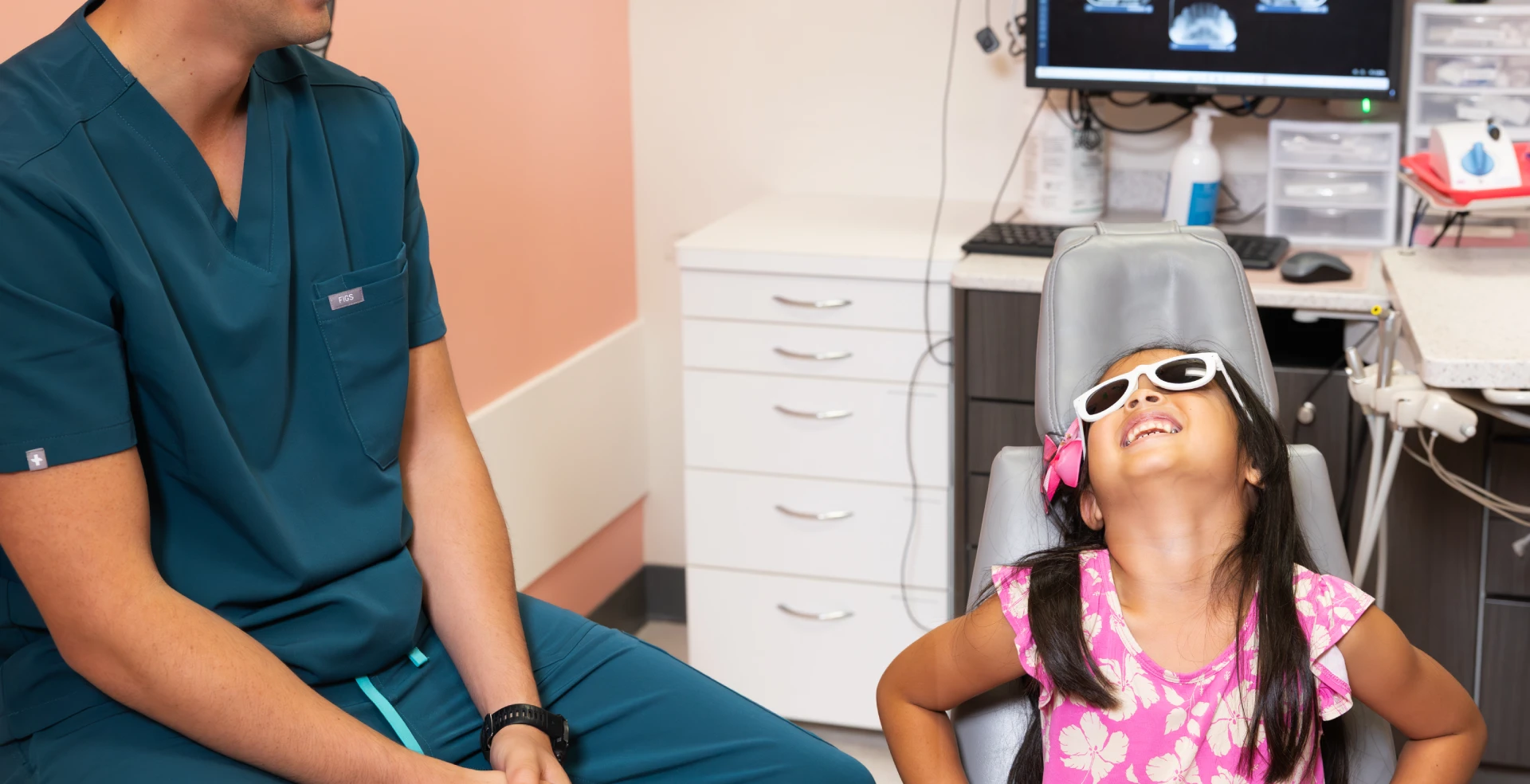
Extractions and pulpotomies in Pearl City
Saving teeth whenever possible
When a tooth needs extraction, we always explore options to preserve it first. If extraction is unavoidable, we ensure the experience is comfortable and straightforward, with a plan to protect your child's long-term oral health.
Extractions & Pulpotomies
When preservation isn't possible, we prioritize comfort and care
At Oahu Pediatric Dentistry, we believe in preserving natural teeth whenever possible. However, there are times when a tooth is too damaged or severely decayed to save, and extraction becomes the best option for your child's health. When we recommend an extraction, we've already explored all alternatives, including pulpotomies and restorative options. If extraction is necessary, we perform basic tooth extractions with comfort and precision. For complex cases or surgical extractions, we refer to an oral surgeon to ensure your child receives specialist-level care. We also perform pulpotomies, a procedure that removes the coronal portion of an infected tooth's nerve, preserving the root and allowing the tooth to remain functional. This tooth-saving procedure is ideal for children with deeply decayed primary teeth and can prevent the need for extraction.
The benefits ofExtractions & Pulpotomies

Preserve teeth when possible through pulpotomies
Pulpotomies remove only the coronal (top) portion of the tooth's nerve, preserving the root and allowing the tooth to remain in place and continue supporting proper development. This tooth-saving alternative to extraction is ideal for children with special needs who may struggle with healing after extraction.
Eliminate pain and infection
When a tooth is infected or causing pain, extraction or pulpotomy can provide relief quickly. Your child will no longer experience discomfort, and we eliminate the source of potential complications from untreated infection.
Prevent complications from early tooth loss
Losing a primary tooth too early can cause neighboring teeth to shift, leading to crowding and misalignment of permanent teeth. By preserving teeth through pulpotomies when possible, we avoid these complications and may prevent the need for orthodontic treatment later.
Our extraction and pulpotomy treatments
Pulpotomies
A pulpotomy is a pediatric-specific procedure that removes the coronal (top) portion of a primary tooth's pulp (nerve) when deep decay has infected it, while preserving the root portion of the nerve. This allows the tooth to remain functional, continue supporting the eruption of the permanent tooth, and avoid the complications of early extraction. The procedure involves removing the diseased pulp tissue, thoroughly cleaning the pulp chamber, and placing a biocompatible dressing that promotes healing. We then restore the tooth with a crown to protect it long-term. Pulpotomies are performed under local anesthesia and are quick, often taking less time than a traditional filling. For children with high cavity risk, multiple cavities, pre-cooperative behavior, or special needs, pulpotomies offer a practical alternative to extraction that preserves the tooth and reduces the need for future treatment.
Tooth extractions
When a primary tooth is too decayed or damaged to save, or when it's preventing the eruption of a permanent tooth, extraction may be the best option. We perform basic tooth extractions using gentle technique and local anesthesia to ensure your child is comfortable throughout the procedure. The extraction process is straightforward: we gently loosen the tooth and remove it carefully. For anxious children or those with special needs, we offer additional comfort measures like nitrous oxide sedation or topical numbing. Most extractions are quick and straightforward. After extraction, we'll discuss the healing process and whether a space maintainer is needed to prevent shifting of neighboring teeth. For complex extractions or surgical cases, we refer to an oral surgeon who specializes in more involved procedures.
The extraction and pulpotomy process

Step 4
Recovery and aftercare
After extraction, we'll discuss the healing process, what to expect, and how to care for the area. We may recommend a space maintainer to prevent tooth shifting. After a pulpotomy, we'll explain crown placement and how to protect the treated tooth. We'll provide detailed aftercare instructions and may schedule a follow-up visit to ensure healing is progressing well. Most children resume normal eating and activities within days.
Step 3
Gentle procedure with anesthesia
We'll administer local anesthesia to numb the area completely before beginning the procedure. For pulpotomies, we remove the diseased pulp tissue, clean the chamber, and place a biocompatible dressing. For extractions, we gently loosen and remove the tooth. Both procedures are designed to be quick and cause minimal trauma. We work carefully and communicate with your child throughout. Many children are surprised by how easy the procedure is compared to what they expected.
Step 2
Consultation and comfort planning
Before any procedure, we'll discuss the treatment plan, answer your questions, and address any concerns about your child's comfort. For children with anxiety or special needs, we'll discuss comfort measures like topical numbing, local anesthesia, nitrous oxide sedation, or scheduling considerations. We want your child to feel prepared and supported. For complex extractions, we may refer to an oral surgeon. Our goal is always to ensure your child has a positive experience, even when treatment is necessary.
Step 1
Examination and diagnosis
During your child's visit, we'll examine the affected tooth and assess whether it can be saved or needs extraction. We may take digital X-rays to evaluate the extent of decay, the status of the tooth's root, and the position of the permanent tooth underneath. We'll discuss our findings with you and explain our recommendation. If we recommend pulpotomy, we'll explain how it preserves the tooth. If extraction is necessary, we'll explain why and discuss what to expect.
Frequently Asked Questions
Below you'll find answers to common questions about extractions and pulpotomies. If you have additional questions, our team is always happy to help.
A pulpotomy removes the coronal (top) portion of the tooth's nerve in a primary tooth, preserving the root portion and allowing the tooth to remain in place. A root canal removes the entire nerve of a permanent tooth. Pulpotomies are a pediatric-specific procedure designed for primary teeth that will eventually shed. Root canals are performed on permanent teeth that need to last a lifetime. Pulpotomies are simpler and less invasive than root canals, making them ideal for children and primary teeth.
Losing one primary tooth usually doesn't significantly affect speech or appearance, as children have multiple teeth and the gap closes over time. However, losing multiple primary teeth early due to decay can affect eating ability and speech development. This is why we emphasize prevention and, when necessary, use pulpotomies to preserve teeth rather than extracting them. If a tooth is extracted, we may recommend a space maintainer to prevent neighboring teeth from shifting.
Yes. Extractions and pulpotomies can be performed for children with special needs, including those with autism, sensory sensitivities, developmental delays, or anxiety. We tailor our approach to each child's needs, which may include additional time, sedation options, break periods, or specialized communication strategies. Pulpotomies are especially beneficial for children with special needs because they preserve the tooth and reduce the need for future treatment. We're experienced in working with all children.
Still Have Questions?
Call us for more information or to schedule an appointment.
Don't just take our word for it.
Hear from parents and families who've experienced the Oahu Pediatric Dentistry difference.

Anais Ford
I highly recommend this Pediatrics’s Dental office. My experience was outstanding with Dr. Jason and all the staff I encountered. My 4 day old daughter had a tongue tie that was fixed with a sense of urgency, as it was impeding on breast-feeding. I could not be happier with how soon they could get us an appointment and fix our needs. Everything was explained so clearly from the procedure to the care afterwards I am beyond grateful.
Jana Walden
Such an excellent atmosphere for keiki and their family, with a wonderful staff! Dr. Cody Sia, Cyndi, Trinity, Nichole, and Rose, were so amazing for my toddler's first dentist visit and to repair her chipped front tooth. Definitely recommending them and coming back!
Aryanne Curcio
This is a wonderful office! The staff were very friendly and informative, from the receptionists (I didn't get their names), to the dental hygienist Nichole and dentist Dr. Cody. Our daughter is 2 and this was her first dental appointment. As first time parents we really appreciated how organized their process was and how they explained to us what to expect. They took a poloroid photo of us and gave us a "certificate" for our daughter's first visit, which I thought was really cute. I would highly recommend this pediatric dentistry!
Carrie Grimm
When we walked in we were greeted with a smile and warm welcome by the receptionist. Check in was easy. Waiting area is clean and they have plenty seating. All the rooms are filled with characters and tv on the ceiling.( Genius). I was very impressed with how they explained the tools and what was going to happen with my son’s cleaning. The calm demeanor all the hygienist carries throughout the place. The Dentists are very personal and amazing with kids. They treat my son like their own. We will continue to be loyal patient to this wonderful Ohana there.
Cherie Conner
I love Oahu Pediatric Dentistry been with them since the beginning and even before when they used to be behind Leeward bowl literally my kids whole lives!! 🤣 My kids are now 14 and 19!! The entire staff is super friendly, very professional, and gives great breakdowns when explains things that need to be done and you can tell they love what they are doing. Also the LOVE the way it is decorated with different themes in each room, TV so your child can pick a movie they would like to watch to keep them distracted, toy machine afterwards for doing such a great job.
Very Clean and Organized!!
10/10 definitely recommend if looking for a dentist! 😎🥰
Neka Lanoza
I took my 14-month-old for her first dentist visit today and I already love this office! The receptionists are extremely friendly and the dental hygienists and dentist made my daughter’s experience a quick and painless one. I love the themed rooms—my baby was very quick to point to the Bluey room—and the TV screens on the ceiling are a great distraction for little ones while they get their teeth worked on. At the end of our visit, they gave us a goodie bag, took a Polaroid pic of us together, and gave us an adorable certificate to commemorate baby’s first dentist visit! These personal touches meant a lot to this first-time mom trying to navigate first-time everythings. :)
Gloria Zambrano Pula
My son has such a hard time going to the dentist, he has anxiety due to a few bad experiences at his prior dentist. We needed to get back on track so I looked for a dentist and found this one. The staff are so upbeat and willing to help! I am so glad I brought my son here:,) he was anxious at first but they called him "buddy" which is what his favorite teacher calls him so it eased his nerves a lot! As a Mother I am so thankful they were mindful of him and treated him kindly! It means so much! The encouragement and positivity was greatly appreciated! We found our new dentist! Thank you Jesus!
Cynthia Brubaker
They were amazing, super professional, efficient and very impressed. Tysm!
We came back from our mainland vacation with a need immediately to try to help relieve our daughter's issue.
Called Monday morning after July 4th weekend and they were like, can you come today?
Absolutely!
I have been a pediatric nurse 30 years and I can't tell you how happy and grateful I am that this situation with our medically fragile adopted toddler could be addressed so promptly! 5 🌟 🤩!
Hannah Craig
Today was our eldest first dentist visit ever! She is an incredibly cautious kid and get extremely anxious and scared in new places like a doctors offices. The team was so understanding and supportive during the process and didn’t push her to do anything she absolutely wasn’t comfortable with. While she cried pretty much the entire time they reassured her and tried to make it as quick and as stress free, all while being extremely thorough so she received the best care possible! We are so grateful to all of the staff and Dr. Jason for being so understanding and patient with our daughter! I cannot recommend this dentist office enough!